Hair loss in women: normal shedding, the widening part, and what dermatologists actually treat it with
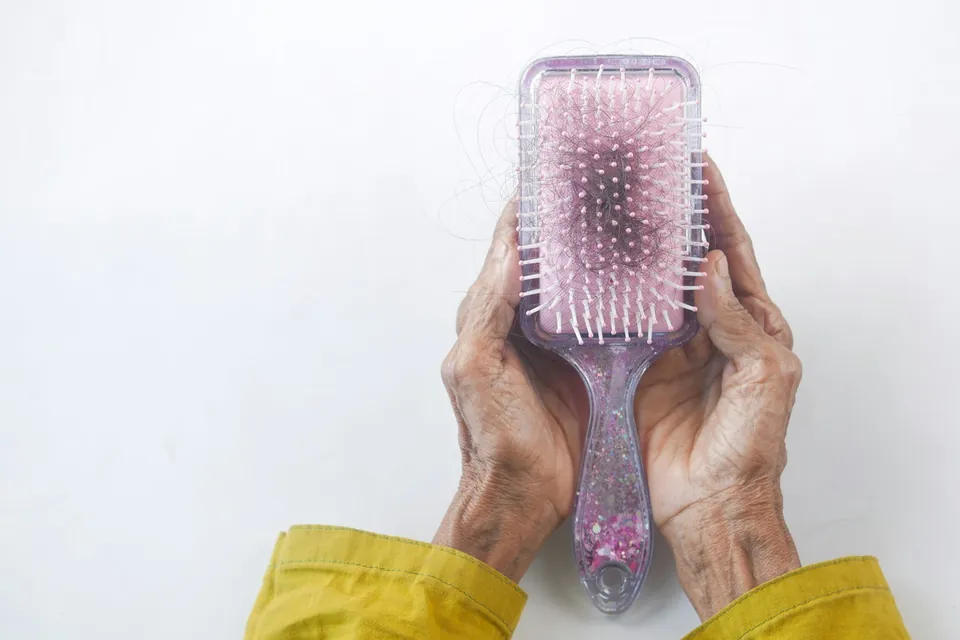
More hair in the shower drain, a ponytail that feels thinner, a part that looks wider in photos. Hair loss in women is common and often temporary, but some types respond best when treatment starts early. The first step is working out which kind you are looking at.
This article is general information, not medical advice. If you think you need care, contact a health professional.
First, how much shedding is normal
Losing hair every day is not a sign that something is wrong. According to the American Academy of Dermatology (AAD), it is normal to shed between 50 and 100 hairs a day. Hairs grow, rest and fall out in cycles, and new ones replace them. Long hair can make a normal day's shedding look dramatic, because each strand gathers more visibly in a brush or on a pillow.
Dermatologists separate two quite different situations, and the difference matters for what happens next:
| Excessive shedding | Hair loss | |
|---|---|---|
| What happens | The body sheds many more hairs than usual, but the follicles keep working | Something stops hair from growing, or makes it grow back thinner |
| Medical name | Telogen effluvium | Depends on the cause: female pattern hair loss, alopecia areata, traction alopecia and others |
| Typical course | Hair usually regains its normal fullness within six to nine months | Often continues until the cause is treated; some types are permanent |
Source: American Academy of Dermatology.
Shedding a few months after a shock to the body
Excessive shedding usually follows a stressful event, and the delay is what confuses people. The AAD lists common triggers: losing 20 pounds or more, giving birth, a high fever, surgery, stopping birth-control pills, and emotional stress such as a divorce or the death of a loved one. Most people notice the shedding a few months after the event, not during it, which is why it is easy to miss the link.
Childbirth is the classic example. The AAD describes new mothers seeing excessive shedding about two months after giving birth, peaking at about four months. The same pattern applies to other triggers: the hair that falls now was pushed into its resting phase weeks earlier.
The reassuring part is that this kind of shedding usually stops on its own once the body recovers, with hair returning to normal fullness within six to nine months. The exception is ongoing stress: people who are constantly under a lot of pressure can have long-term excessive shedding, which is one more reason to take the warning signs in our guide to burnout seriously.
Female pattern hair loss: the widening part
The most common cause of hair loss in women is female pattern hair loss, the hereditary form. It does not look like male baldness. In women, the AAD says, the first noticeable sign is usually a part that gets wider or overall thinning, sometimes with hair receding near the temples. Without treatment it can progress from a widening part to thinning across the top of the head.
It usually begins when a woman is in her 40s, 50s or 60s, although the shrinking of hair follicles can start as early as the teens. Those decades overlap with the transition described in our guide to menopause symptoms, so it is worth mentioning hair changes at the same appointment. A simple way to track it yourself is to take a photo of your part in the same light every few months; slow thinning is hard to notice in the mirror.
Causes a doctor can find and treat
Several causes of hair loss are medical problems in their own right, and treating them is what brings the hair back. The AAD lists, among others:
- Thyroid disease. A thyroid problem can cause thinning hair, and treating the thyroid can reverse the loss.
- Too little iron, protein, zinc or biotin. A shortfall in one or more of these can cause noticeable hair loss, and hair can regrow once the body has enough. Iron is the one most relevant to women of reproductive age; our guide to iron deficiency in women explains why periods and pregnancy drain it and which blood test measures your stores.
- Hormonal imbalance. Polycystic ovary syndrome (PCOS) is a common cause; stopping some birth-control pills can also cause a temporary imbalance.
- Alopecia areata. An autoimmune condition in which the immune system attacks hair follicles. It can affect the scalp, eyebrows, eyelashes and other body hair. Hair sometimes regrows on its own, and treatment can help when it does not.
- Medicines. Hair loss is a possible side effect of some medications. The AAD warns not to stop a medicine without talking to the doctor who prescribed it first; regrowth is possible once the cause is dealt with.
The one cause you control: hairstyles that pull
Tight ponytails, buns, braids and extensions that pull on the hairline day after day can cause traction alopecia. The AAD is blunt about it: the continual pulling can lead to permanent hair loss, and once follicles are destroyed, hair cannot regrow. The loss can, however, be prevented by changing hairstyles. Loosening the style, alternating where the tension falls and giving the hairline regular breaks are the practical versions of that advice.
What treatment can do
For female pattern hair loss, the AAD calls minoxidil the most recommended treatment. Products with 2% or 5% minoxidil are approved for women and sold without a prescription. Three things are worth knowing before you start:
- It is slow. You need to use it continuously for about six to 12 months to tell whether it works.
- Shedding can increase at first. Some women shed more for the first two to eight weeks. This is expected and usually settles.
- It works only while you use it. If you stop applying minoxidil, you lose its benefits and gradually notice more shedding.
Women who are pregnant, planning a pregnancy or breastfeeding should not use minoxidil.
Dermatologists also prescribe pills such as spironolactone, finasteride, flutamide and dutasteride. These are approved by the FDA for other conditions, not for hair loss, and prescription hair-loss medicines should not be used by women who are pregnant or may become pregnant. As with minoxidil, the effect fades: hair is lost again within about three to four months of stopping. For some women, a hair transplant is possible if there is enough healthy hair to move.
What the evidence does not support (yet)
| Option | What the AAD says |
|---|---|
| Biotin and folic acid supplements | No effect in most studies; evidence for supplements in general is mixed |
| Hair-loss shampoos | Can make hair look fuller, but cannot regrow hair or stop it getting worse |
| At-home laser devices | Cleared by the FDA, but long-term safety and effectiveness are unclear |
| Platelet-rich plasma, stem cells | Early or experimental; more study is needed |
Source: American Academy of Dermatology, Female pattern hair loss: diagnosis and treatment.
Biotin is the one to watch. A true biotin deficiency can cause hair loss, but taking extra when you are not deficient has not been shown to help, so a supplement aisle is not a substitute for a diagnosis.
When to see a dermatologist
If you are worried about how much hair you are losing, a dermatologist can work out the cause, often starting with a look at your scalp and blood tests for the medical causes above. The AAD's general advice is that for many types of hair loss, the sooner treatment begins, the better the outlook. Book an appointment if:
- your part is widening or your ponytail is noticeably thinner than a year ago;
- hair is coming out in patches, or you are also losing eyebrows or eyelashes;
- shedding has gone on for longer than the six to nine months a temporary episode usually lasts;
- the hair loss started after a new medicine, or comes with tiredness, heavy periods or other symptoms that suggest a thyroid or iron problem.