High blood pressure in women: the numbers, the silent years, and the moments to check
Four in ten American women have high blood pressure, and most feel nothing. It is a major cause of heart disease and stroke – heart disease being the leading cause of death for women – and one of the easiest risks to measure.
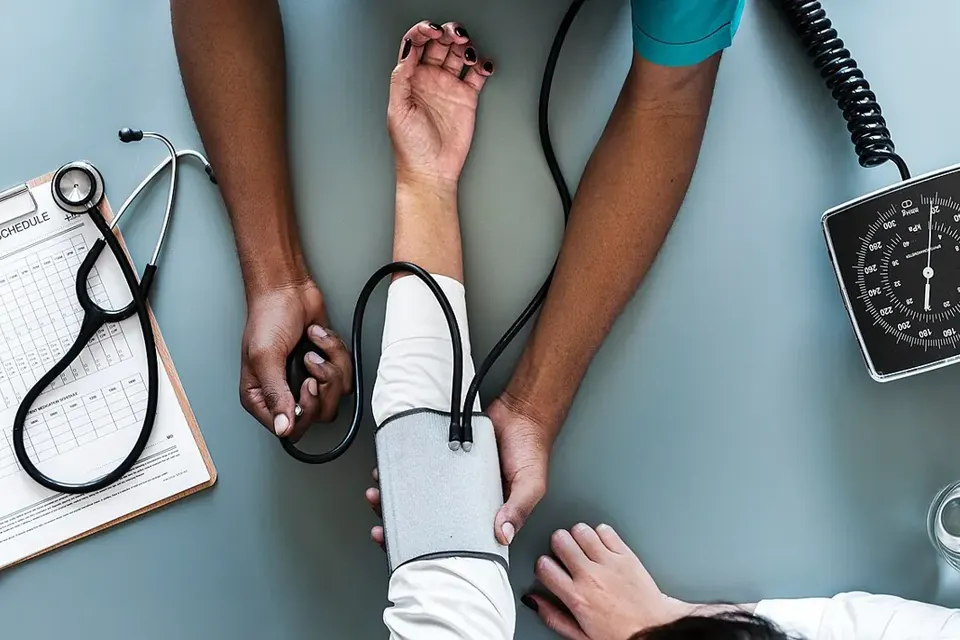
This article is general information, not medical advice. If you think you need care, contact a health professional.
What the numbers mean
A blood pressure reading has two numbers, in millimetres of mercury (mm Hg). The top one, systolic, is the pressure in your arteries when the heart beats; the bottom one, diastolic, is the pressure between beats. The categories used by US doctors come from the American College of Cardiology and the American Heart Association, and the CDC sets them out like this:
| Category | Top number | Bottom number | |
|---|---|---|---|
| Normal | under 120 | and | under 80 |
| Elevated | 120–129 | and | under 80 |
| Stage 1 hypertension | 130–139 | or | 80–89 |
| Stage 2 hypertension | 140 or higher | or | 90 or higher |
| Severe hypertension | over 180 | and/or | over 120 |
Source: CDC, About High Blood Pressure (ACC/AHA categories).
Only one number needs to be high: 128/84 is stage 1, because the bottom figure is in the 80s. And one reading is not a diagnosis. Blood pressure changes through the day, so doctors look for readings that are consistently high, often over more than one visit or with measurements taken at home.
A reading over 180/120 is treated differently depending on how you feel. Without symptoms, the CDC says to call your health professional. With chest pain, shortness of breath, back pain, numbness, weakness, a change in vision or difficulty speaking, it is a hypertensive emergency: call 911 or your local emergency number.
How common it is in women
According to the CDC, nearly half of US adults – 48.1%, or about 120 million people – have high blood pressure, defined as a reading above 130/80 or taking medication for it. The rate is lower in women than in men, but not by much:
Adults with high blood pressure, United States. Source: CDC, High Blood Pressure Facts.
Control is the bigger problem. Only about 1 in 4 adults with high blood pressure has it under control, and about 1 in 6 does not know they have it. In 2024, high blood pressure was a primary or contributing cause of 680,179 deaths in the United States.
Why you can feel fine for years
High blood pressure usually causes no signs or symptoms. Headaches, nosebleeds or a flushed face are not reliable warnings; many people with dangerous readings have none of them. The damage builds quietly in the arteries of the heart, brain and kidneys. The CDC lists heart attack, heart failure, stroke and chronic kidney disease among the consequences, and high blood pressure in midlife is linked to poorer cognitive function and a higher risk of dementia later in life.
That is why the same risk conversation comes up in our guide to heart attack symptoms in women: blood pressure is one of the first things to check after any heart scare, and one of the few risks you can measure at home.
The moments in a woman's life to pay attention
Pregnancy
High blood pressure can exist before pregnancy, appear during it or develop after the birth. During pregnancy, doctors diagnose it at 140/90 or higher on two readings at least four hours apart; 160/110 or higher is severe and needs prompt care. The CDC distinguishes:
- chronic hypertension – present before pregnancy or found before 20 weeks;
- gestational hypertension – new high blood pressure after 20 weeks in a woman whose blood pressure was normal before;
- preeclampsia – usually after 20 weeks, with high blood pressure and sometimes protein in the urine or signs that other organs are affected. It occurs in about 2% to 8% of pregnancies and is one of the leading causes of pregnancy-related death.
Warning signs of preeclampsia include a headache that will not go away, blurred vision or seeing spots, pain in the upper stomach, nausea or vomiting, swelling of the face or hands, sudden weight gain and trouble breathing – though some women have no symptoms, which is why prenatal checks matter. For women at higher risk, health professionals may recommend low-dose aspirin, started at the right time.
The weeks after the birth
Preeclampsia can also start after delivery, even in women who did not have it while pregnant. Postpartum preeclampsia usually appears within 48 hours of the birth but can develop up to six weeks later. A severe headache, vision changes or shortness of breath in those weeks should be reported straight away, not put down to tiredness.
Midlife and menopause
Age is one of the CDC's listed risk factors, and blood pressure tends to rise for women in the years around menopause. Changes in sleep, weight and stress often arrive at the same time – our article on how much sleep women need covers why sleep gets harder in that phase. A reading that was normal at 35 is no guarantee at 50.
Medication
Certain medicines are on the CDC's list of things that can raise blood pressure. If you take hormonal contraception, decongestants or regular anti-inflammatory painkillers, ask whether your blood pressure should be checked more often.
How to get an accurate reading at home
Home monitoring helps confirm a diagnosis and shows whether treatment is working; the CDC notes that as many as 1 in 3 people with a high reading at the doctor's office may have normal readings outside it ("white coat" effect). For a reading you can trust:
- Use a validated upper-arm monitor with a cuff that fits your arm, on bare skin.
- Do not eat, drink, smoke, have caffeine or exercise in the 30 minutes before; empty your bladder.
- Sit with your back supported for at least 5 minutes, feet flat, legs uncrossed, arm resting on a table at chest height.
- Do not talk during the measurement. Take at least two readings, one or two minutes apart, at the same time each day.
- Write the readings down and bring the log to your appointment.
What lowers it
Many people can bring their numbers into a healthy range, or keep them there, with daily habits; some also need medication, taken as prescribed. The CDC's list is short: about 30 minutes of physical activity a day, five days a week; not smoking or vaping; a diet lower in sodium and alcohol; a healthy weight; and managing long-term stress, which is also on its list of risk factors – see our guide to the signs of burnout if work stress is the issue.
The single most useful step is the simplest: know your numbers. A pharmacy machine, a home monitor or a routine appointment takes a few minutes, and it is the only way to find out.